Article
Charity Website Rebuild: Complexities Agencies Are Hiding
Charity website rebuild projects are rarely as straightforward as they seem.
LAST UPDATED:June 17, 2026
If you manage digital platforms for a charity, you've probably had this experience.
You brief an agency. They come back enthusiastic, full of ideas about design and user experience and content strategy. The proposal looks good. The timeline looks achievable. The price feels reasonable.
And then, about three months into the project, something surfaces that nobody planned for. An accessibility requirement that needs rethinking from the ground up. An integration with your CRM that turns out to be far more involved than the discovery session suggested. A data protection issue that stops a feature in its tracks. Or, most painfully, a donation journey that launches beautifully and converts terribly.
This isn’t always the agency’s fault. Sometimes it genuinely is. But more often it’s the result of a scoping process designed for a commercial website being applied to something that operates under a very different set of rules.
We’ve built digital platforms for charities working across victim support, employment, music, and heritage. Our current clients include the Licensed Trade Charity, which supports people working in hospitality, and Friends of Friendless Churches, which works to preserve historic buildings of worship across the UK. We’re about to launch a new website for London Sinfonietta, one of the country’s leading contemporary music organisations.
Each project has taught us something new. But the lessons that apply across all of them, regardless of sector or size, are the ones we want to share here.
This article is for digital managers scoping a rebuild, marketing directors building the business case, and senior leaders who want to understand what they’re actually commissioning before they sign anything. The complexity is real, but it’s manageable if you go in with the right questions.
The thing that matters more than almost everything else: donation friction
Before we get into the compliance and technical layers, let’s start with the insight that has had the most consistent and measurable impact across every charity website we’ve worked on.
Every field you add to a donation form, every page a user has to navigate through, every distraction that sits between intent and completion, costs you money. Not in some abstract UX theory sense. In actual, countable donations that don’t happen.
The relationship is direct and well-documented. Remove a field from a donation form and conversion goes up. Reduce the number of steps in the donation journey and completion rates improve. Strip out navigation, promotional banners, and competing calls to action from the donation page and the money you’ve already spent bringing someone to that point is far less likely to be wasted.
We’ve applied this principle across all of our charity work, and it’s one of the first things we look at when a charity asks us to review their existing site before committing to a full rebuild. Often there’s meaningful low-hanging fruit here before a rebuild is even necessary. A simplified donation journey, a faster-loading donation page, a single focused call to action above the fold. These changes are achievable quickly, they’re measurable, and they make the case for further investment using your own data.
For digital managers: this is also one of the clearest ways to demonstrate ROI from digital investment to your leadership team. A 10% improvement in donation conversion on a site taking £200,000 per year in online donations is £20,000 in additional income. That number is easy to explain in a board meeting.
For CEOs and trustees: if your agency hasn’t talked to you about donation journey optimisation as a priority, ask why.
The compliance layer most agencies underestimate
WCAG 2.2 (the Web Content Accessibility Guidelines, current version) isn’t a nice-to-have for charities. Many organisations that receive public funding, contract with the NHS, or operate under public sector equality duties have a legal obligation to meet accessibility standards. For charities that serve disabled people directly, the reputational implications of an inaccessible website are significant beyond the legal exposure.
Here’s what this actually means in practice. Meeting WCAG 2.2 AA standard affects how navigation is structured, how forms are built, how error messages are written, how video content is handled, how PDFs are created and linked, how interactive elements behave with keyboard-only navigation, and how screen readers experience every page on the site.
A commercial agency that hasn’t built for this before will often treat accessibility as a checklist to run at the end of a project. That approach almost always results in expensive retrofitting. Accessibility built into the architecture from day one looks completely different from accessibility bolted on afterwards.
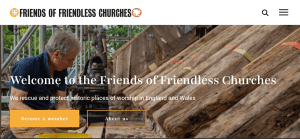
Our work on Friends of Friendless Churches is a good example of this done properly. The charity’s audience spans a wide age range, including many older visitors with varying levels of digital literacy and accessibility needs. We built the UI and UX with those users in mind from the earliest design decisions, not as an afterthought. The result is a site we’re genuinely proud of, both aesthetically and in terms of how it actually performs for the people using it.
Ask any agency you’re considering: “Walk me through how you approach WCAG 2.2 compliance from the start of a project.” The quality of that answer will tell you a great deal.
The systems integration problem nobody budgets for properly
Most charities of any size are running a fairly complex technology stack. A CRM. A fundraising platform. A volunteer management system. Case management software. Email marketing tools. Finance systems.
The website is supposed to sit on top of all of this and, in many cases, connect to it. Donation forms need to feed into the CRM. Volunteer sign-up journeys need to talk to the volunteer management platform. Service referral tools need to connect to case management systems. Event registrations need to sync with the database.
Every one of those integrations is a project in itself. The complexity depends on whether the systems have well-documented APIs, whether your data is clean enough to integrate without a significant tidying exercise first, and whether the two platforms have been connected before or whether this is genuinely custom work.
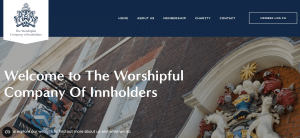
Our work on the Worshipful Company of Innholders site involved building a user admin area that we’re particularly proud of. The brief required not just a public-facing website but a functional backend that their team could use to manage members, events, and content without needing technical support for routine tasks. Getting that right required deep discovery into how the organisation actually operates day to day, not just what the website needed to look like.
Before you finalise any scope with an agency, get them to sit down with your IT lead and document every integration requirement in detail. What system, what data flows in each direction, what happens when it goes wrong, and who owns the maintenance afterwards. That conversation will quickly reveal whether the quoted hours are realistic.
Your users are not average users
This is the point that gets missed most often, and it matters enormously.
Commercial websites are typically designed for users with reasonable digital literacy, using modern devices, in reasonably stable circumstances. Charities often serve people who are none of those things.
Victim support organisations serve people in acute distress, often accessing the site on a mobile, potentially in a hurry or in a situation where their browsing history needs to stay private. The Licensed Trade Charity serves people in the hospitality industry who may be experiencing financial hardship, mental health difficulties, or crisis situations, and for whom a confusing or slow-loading referral journey could mean they don’t get the help they came looking for. Heritage charities like Friends of Friendless Churches serve an audience that skews older, values depth of content, and needs an experience that doesn’t assume high digital fluency.
London Sinfonietta’s upcoming site serves a completely different profile again: engaged arts audiences who expect a certain quality of digital experience and who are comparing it, consciously or not, with the best cultural institution websites in the country.
There is no single template for “charity users.” Good charity web agencies spend a significant portion of discovery asking who is actually going to use the site, in what circumstances, and what the consequences of a poor experience look like for them. For some charities, a clunky journey is merely frustrating. For others, it’s a safeguarding issue.
If the agency you’re talking to doesn’t ask about your service users early and in depth, that’s a signal.
Procurement is not an afterthought
For charities of any scale, and particularly those receiving significant public funding, the procurement process around a rebuild can be as complex as the build itself.
Many charities are bound by procurement thresholds that trigger competitive tendering requirements. Some operate within frameworks that specify which suppliers they can work with. Some have grant conditions attached to specific funding streams that affect what the money can be spent on and what reporting is required after the project completes.
Understanding the procurement requirements before you start engaging agencies will save you significant pain later. Does the project value exceed your threshold for competitive tender? Are there approved supplier frameworks your organisation must use? Are there grant conditions attached to any of the funding that affects supplier choice or deliverable specifications?
The answer to who leads the commercial relationship with us depends on the charity’s size. With smaller organisations, we often work directly with the CEO or trustees. With larger ones, the digital or communications lead owns the day-to-day relationship while senior leadership signs off on key milestones. Both work well when everyone understands their role. What doesn’t work well is when procurement complexity is discovered halfway through a project that’s already been scoped and contracted.
Data protection is a design requirement, not a legal review at the end
Charities often hold sensitive personal data about people in vulnerable situations. The regulatory expectations around how that data is collected, stored, and processed are correspondingly higher than for a typical commercial website.
This has direct implications for how a site is built. Consent mechanisms need to be properly designed, not just technically present. Forms that collect information about health conditions, financial situations, or personal circumstances need to be built with appropriate security and clear information about how the data will be used. Any third-party tools that process personal data, including analytics platforms, email marketing tools, and CRM integrations, need to be assessed under GDPR’s data processing requirements.
Your Data Protection Officer needs to be involved from the start, not consulted at the end. And the agency you work with needs to be comfortable with that involvement.
If the agency’s proposal mentions GDPR only in the context of a cookie banner, that’s a scoping gap.
The governance layer inside your organisation
One thing that surprises agencies who haven’t worked with charities before is the number of internal stakeholders who have a legitimate voice in what the website does and how it looks.
In a commercial business, a marketing director typically owns the website decision. In a charity, you might have service delivery leads who own content about specific programmes, a fundraising team with views on donation journeys, a policy team that signs off on public-facing messaging, a comms team managing brand, a CEO who takes a personal interest in how the organisation is represented, and trustees who approved specific positioning around impact and values.
Managing this requires an agency that understands how to run a charity project, not just a web project. That means a discovery process that includes the right people from the start, a content governance model built into the project plan, and a realistic timeline that accounts for sign-off processes that move at a different pace than commercial decision-making.
Agencies that have only worked with commercial clients often underestimate this. They plan for one or two rounds of feedback. Charity projects often need more, for legitimate reasons, and the timeline needs to reflect that honestly.
What to ask an agency before you appoint
These questions will separate agencies that understand this world from those that don’t.
On donation optimisation: “What specific changes have you made to donation journeys on previous charity sites, and what did those changes do to conversion rates?” If they can’t give you a specific answer, they haven’t done this before.
On accessibility: “Walk me through a project where you built to WCAG 2.2 AA from the start. What did that look like in practice and how did you test it?”
On integrations: “We use [your CRM]. Have you integrated with it before? Who was the technical lead on that project and can we speak to them?”
On vulnerable users: “How do you approach UX research for audiences who may be in difficult circumstances? Have you built exit buttons, privacy modes, or safeguarding features into a site?”
On procurement: “Are you familiar with charity procurement requirements? Have you worked within grant-funded projects where deliverables were tied to specific funding conditions?”
On governance: “How many stakeholders do you typically involve in discovery for a charity project? How do you manage conflicting feedback from multiple internal teams?”
Vague answers to specific questions are an answer in themselves.
A final thought
The complexity outlined in this article is real, but it’s not a reason to delay. Charities rebuild their digital platforms successfully all the time. The ones that go well share a common thread: they were scoped by an agency that understood what they were actually taking on, with a client-side team that had already thought through the compliance, integration, and governance requirements before a line of code was written.
The ones that go badly usually stall in exactly the areas above. Accessibility retrofitting that derails the launch timeline. Integrations that balloon in scope. Data protection reviews that require design changes late in the project. Donation journeys that convert poorly because nobody thought hard enough about friction.
Going in informed doesn’t make the project simpler. But it means you can plan for the complexity rather than be surprised by it.
We’re currently working with charities of varying sizes and complexity, from small heritage organisations to national support services. If you’re at the early stages of thinking through a rebuild, we’d be glad to have an honest conversation about what’s involved. No pitch. Just a practical look at where you are and what the real scope of work is likely to be.
Book your free 30-minute digital audit here
London Web Design Agency is a specialist web design and digital strategy consultancy with direct experience building platforms for charities and public sector organisations. Our current charity clients include the Licensed Trade Charity, Friends of Friendless Churches, and London Sinfonietta. We’ve been building digital platforms under real-world constraints since 2005.