
Case Study
Most Popular Google Fonts for 2026 (and Why)
The most popular Google Fonts for 2026 aren’t just aesthetic — they’re built for performance and legibility.
LAST UPDATED:May 12, 2026
Based on current trajectory, platform shifts, and design movements, here's what's set to dominate:
Starting with a major shift in modern typography.
1. Google’s Brand Font Is Now Free — And It Changes the Conversation
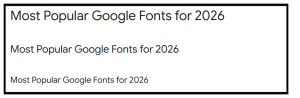
In a significant shift, Google has made its iconic in-house brand typeface Google Sans publicly available through Google Fonts in the form of Google Sans Flex. Previously reserved exclusively for Google’s own products and branding, this move is more than a generous release — it’s a clear signal of where digital typography is heading.
Google Sans Flex is a variable font designed specifically for screen clarity, efficiency, and adaptability. With multiple adjustable axes, it delivers strong legibility across devices while reducing font file bloat — reinforcing the same performance-driven priorities behind Google’s Core Web Vitals.
More importantly, Google opening its own brand font is a public endorsement of variable fonts as the new standard. Typography is no longer about static families, but adaptable systems that balance usability, personality, and speed. That shift underpins every font choice that follows.
Here’s an example of Google Sans Flex:
The Workhorses
2. Inter — The Undisputed Champion
Inter was accessed 414 billion times on Google Fonts in the twelve months ending May 2025, with 57% growth year-on-year. That growth rate isn’t slowing.
Why it’s winning:
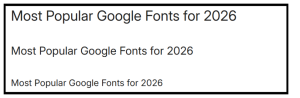
Inter has an x-height of approximately 65% of cap height, compared to Times New Roman at around 45%. At 16px on a mobile screen, Inter’s lowercase letters occupy significantly more pixels, making them easier to resolve at a glance.
Inter is also a variable font family, offering precise control over weight and style. It includes OpenType features such as contextual alternates and tabular numbers that automatically improve readability in different contexts.
Built specifically for screens by Rasmus Andersson during his time at Figma, Inter remains the default choice for SaaS platforms, dashboards, and UI-heavy websites.
Here’s an example of Inter:
3. Roboto (and Roboto Flex)
Still Google’s system font. Still everywhere.
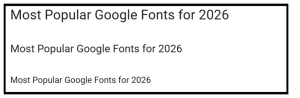
Roboto remains extensively used across Android and the web, accounting for an estimated 20% of global usage. Its strength lies in consistency and cross-device reliability.
The variable version, Roboto Flex, introduces 12 adjustable axes, giving designers far more creative and functional control than the original static family.
Here’s an example of Roboto:
4. Poppins
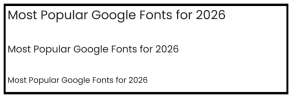
Poppins blends geometric shapes with softer curves, making it a favourite for brands that want to feel modern without feeling cold.
Its popularity continues to grow among startups and lifestyle brands seeking a clean, friendly aesthetic without the ubiquity of Roboto or Inter.
Here’s an example of Poppins:
5. Manrope
Designed by Mikhail Sharanda, Manrope is a geometric sans-serif with clean lines and a contemporary feel.
Converted into a variable font in 2019, Manrope gives designers more control over tone and hierarchy, making it increasingly popular in tech and professional services.
Here’s an example of Manrope:
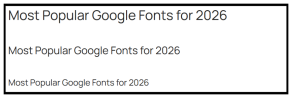
6. Source Sans 3
Source Sans 3 is one of the most modern Google Fonts available, offering refined geometry and consistent performance across platforms.
Adobe’s open-source workhorse continues to gain traction, particularly in enterprise and documentation-heavy environments.
Here’s an example of Source Sans 3:
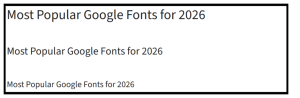
The Comeback Kids (Serifs)
Serif fonts are returning — not out of nostalgia, but necessity.
7. Playfair Display
Inspired by 18th-century typography, Playfair Display delivers elegance and contrast, making it ideal for luxury brands and editorial-style layouts.
Now available as a variable font, it offers far more flexibility than earlier versions.
Here’s an example of Playfair Display:
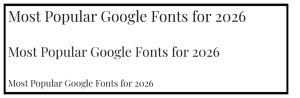
8. Libre Baskerville
Libre Baskerville was designed with a taller x-height and wider counters to improve on-screen readability.
It remains a strong choice for long-form content where clarity and comfort matter more than trendiness.
Here’s an example of Libre Baskerville:

The Underlying Shifts Driving These Choices
Variable fonts have moved from “nice to have” to essential. A single variable font file (typically 100–200KB) replaces multiple static files that can total 400–800KB, improving load times and Core Web Vitals scores.
Screen legibility trumps everything. Fonts that succeed in 2026 prioritise three architectural elements: x-height ratio, open counters, and clear character distinction.
Designers are also rebelling against sameness. The trends shaping 2026 point toward more personality, more craft, and more intentional design. Uniformity is out. Character is back.
Key Takeaway
If you’re building a site in 2026 and want to play it safe, Inter for body/UI paired with Playfair Display for headlines delivers modern legibility with personality.
If you want to stand out while remaining professional, explore Manrope, DM Sans, or even Google Sans Flex before they become the next defaults.
